Ask, Listen, Adjust
The Broadlane Card Conversation
This is a short course designed to equip you with the skills to confidently pitch the Broadlane Preferred Card, meet daily targets, and build customer trust as Broadlane continues to grow.
Takes about 15–20 minutes. Your choices along the way shape a short debrief at the end.
Every card is a small decision with a bigger ripple.
Broadlane is opening two dozen new stores this year, at a time when many major retail names are struggling.
That kind of growth depends on customers having reasons to come back. The Preferred Card is one of the ways Broadlane builds that relationship, value today, and a reason to keep shopping with us. That's where you come in.
Before you hit the floor, let's talk about what this means for your shift.

Here to help you connect Broadlane's goals to your role.
Here's what I want you to keep in mind before you hit the floor.
The Target
Five Preferred Cards per shift.
The Approach
That doesn't mean asking every customer.
The Skill
It's about noticing when the conversation makes sense — and knowing what to say.
You'll get to try this yourself in a minute. Let's see how you'd handle it.
Before you can talk about it, know it.
A customer's about to ask you something about the card. Let's make sure you've got warm, simple answers ready.
Customer — "Oh, what's this card you guys have?"
The Broadlane Preferred Card
Save More on Every Visit
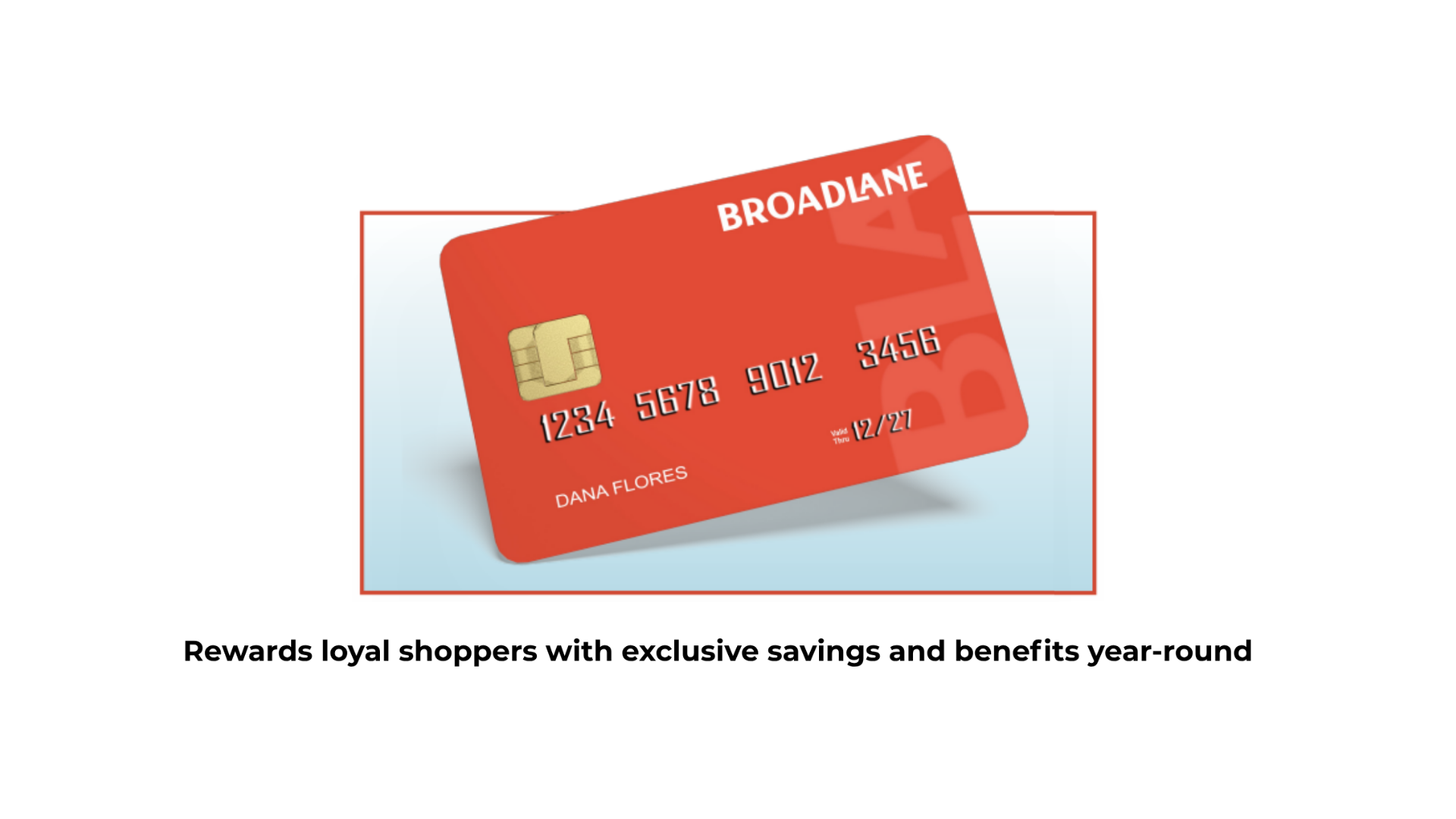
Sign up for your Broadlane Preferred Card in-store or online. It's quick and easy.
Use your card every time you shop at Broadlane.
Earn points and coupons with every purchase and redeem for rewards that give you more.
Open a Preferred Card today and take $25 off what's in your basket right now.
Every time you shop with us after that, you'll be earning coupons and points that turn into cash back, a little something extra for the moments ahead.
Quick check
Customer — "Does the $25 off apply next time I shop too?"
Read the basket first.
Not every purchase is a card moment. Let's build three baskets and decide, each time, whether it's worth mentioning at all.
Large purchases, jewelry, and other high-dollar items are the clearest signals, they're where that $25 off makes a real difference the customer will notice. A handful of small, inexpensive items usually isn't worth the friction of asking.
Two skills here: saying it well, and knowing how much to say.
This module is two short parts, Part A: Craft the Line and Part B: Read the Moment.
A customer's holding a $65 coat. Which line lands better?
New basket: a $40 pair of boots. Build your own tailored line.
Tap phrases in order, aim for something specific to this item, not generic.
Notice how each phrase ties back to this item and this total, that specificity is what makes it land.
Same good line. Different customers.
How much you say should match what the customer is telling you right now, not the price tag. Three quick reads:

Browsing the card display, curious
"So how does this card work, and what do I get with it?"
How much do you say?

Checking phone, glancing at the door
"Sorry, I'm in a bit of a hurry."
How much do you say?

Holding a competitor's store card, says little
"I already have a card. I'm good."
How much do you say?
Not every "no" means the same thing.
A customer might be worried about the value, unsure they need another card, pressed for time, or simply unsure they can trust what they're hearing.
Listen for what's behind the pushback, then respond to that concern.
Everything so far, in one conversation
A customer's buying a $120 coat. Your choices here carry forward, there's no reset between decisions.
The customer walks up calmly, sets down the $120 coat, and pulls out their phone while waiting. Asked how they're doing, they give a polite, neutral smile: "Good, thanks. Just this coat today." No rush, no complaints about price, no questions about the register signs.
How open does this customer seem to a card mention?
There's no single right spot here, this is a read, not a test. Most associates land somewhere in the "neutral, worth a low-key mention" zone for a customer like this.
How do you introduce the Preferred Card?

Customer pausing, phone in hand, weighing it over
The customer gives a non-committal shrug: "I mean, I guess. Is it one of those things where it takes forever to sign up and ruins my credit score?"
HOW DO YOU KEEP THE MOMENTUM GOING WITHOUT BEING PUSHY?
The application came back declined
No speculation on why. Just keep the moment easy for the customer.
"Let's review how your approach can make all the difference in a customer interaction."
THE SHIFT
What worked well
Worth another look
One small cue. Big impact.
Manager
CHOOSE ONE CUE TO CARRY WITH YOU
Click the situation that feels most useful for your next shift.
YOUR CUE
YOUR ACTION
That's the one to carry with you today.
See you on the floor.
Ask. Listen. Adjust. That's the whole conversation.